
How to Repair Loose Deck Boards and Popped Fasteners
A practical DIY deck repair guide focused on movement, popped nails and screws, and surface-level board security.
The short answer
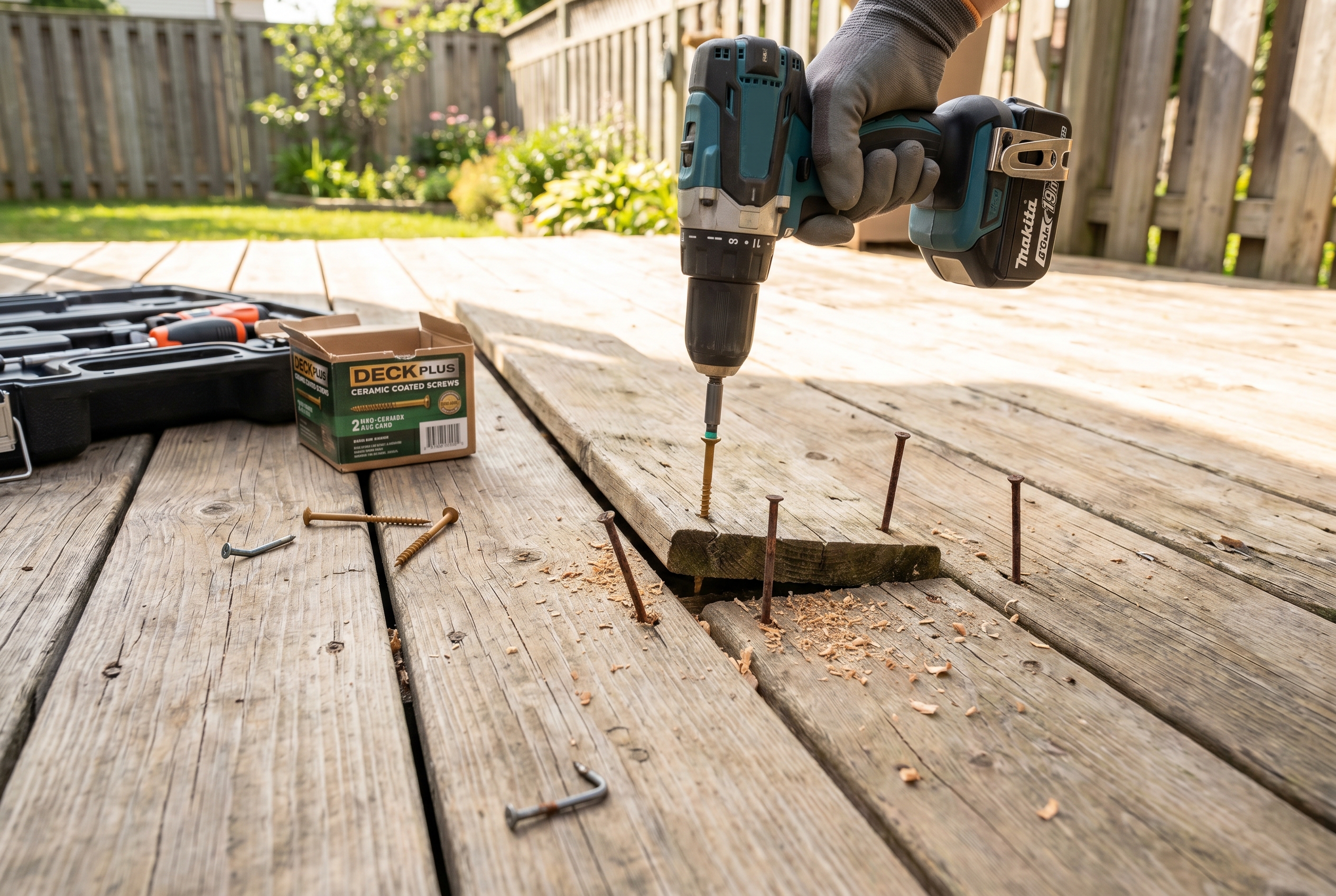
Loose deck boards and popped fasteners are usually repaired by removing the failed fastener, checking whether the board and joist are still sound, and re-fastening with the correct exterior-rated deck screws into solid framing. If the board is split, rotted, or the fastener no longer has good holding power, replacing the board is the better repair.
When this is a surface repair and when it points to something bigger
This is a good DIY job when the deck frame is still solid and the problem is limited to a few loose boards or fasteners working their way up.
Stop and look deeper if you notice:
- Soft or rotten joists under the board
- Widespread loose decking across large areas
- Railings that move when pushed
- Ledger or stair issues
- Corroded fasteners throughout the deck
A loose board is a trip hazard, but it can also be your first clue that the structure below needs attention.
Why deck fasteners pop in the first place
Common causes include:
- Nails loosening as the deck expands and contracts
- Boards shrinking around old fasteners
- Stripped fastener holes in the joist or board
- Corrosion weakening the connection
- Board cupping or warping that lifts the fastener head
Switching from popped nails to proper deck screws is often the most durable upgrade.
Step 1: Inspect the board, joist, and surrounding area first
Walk the deck and mark every loose or raised spot. Push on the board edges and look underneath if the framing is visible. If the joist itself is soft, split, or heavily decayed, re-fastening the top board alone will not solve the problem.
Also check neighboring boards. Repairs tend to go faster when you fix a small cluster at once instead of chasing one pop at a time.
Step 2: Remove the popped or failed fasteners cleanly
Pull popped nails with a pry bar or nail puller, or back out failed screws if possible. Try not to splinter the board surface more than necessary.
If a fastener is badly corroded or stripped, cut it flush and place the new screw nearby into solid wood rather than fighting a damaged hole.
Step 3: Re-fasten with the right screw in the right location
Drive corrosion-resistant deck screws into sound joists. Stay slightly away from the old stripped hole if it no longer holds well. Keep screw placement consistent and avoid driving too close to board ends where splits can start.
Do not rely on the old popped nail hole unless you know it still has bite. A fresh holding point in solid wood is usually the better repair.
Step 4: Replace boards that are split, rotten, or too warped to stay tight
If the board is cracked through, mushroomed around multiple fasteners, or rotted on the underside, replacement makes more sense than repeated spot repairs. Seal cut ends as needed and match fasteners to the deck material and treatment type.
A deck board that will not hold securely is already telling you its useful life is mostly gone.
Step 5: Check the walking surface and prevent repeat issues
Confirm all fastener heads sit flush or slightly below the surface without overdriving. Check board spacing, look for remaining trip points, and sweep off debris. If the deck is due for cleaning or sealing, this is a good time to plan that next step.
Moisture control and routine inspections are what keep a small deck repair from turning into a larger rebuild.
Common mistakes that shorten the life of a deck repair
Reusing stripped fastener holes blindly
A loose hole usually stays loose.
Mixing the wrong fasteners with treated lumber
That can create corrosion and premature failure.
Ignoring rot under the deck board
If the joist is compromised, the surface repair will not hold well.
Overtightening screws and crushing the wood fibers
That can reduce holding power instead of improving it.
DIY vs calling a pro
DIY makes sense for localized board and fastener repairs on an otherwise sound deck.
Consider professional help if:
- the framing below feels soft or unstable
- several boards are failing at once
- the railing, stairs, or ledger connection seem loose
- you are unsure whether the deck remains structurally safe
Internal links you may also want
- Deck Repair Cost Estimator
- Fence Repair Cost Estimator
- How to Fix Cracks in Exterior Wood Trim Before Painting
Frequently asked questions
Should I replace popped deck nails with screws?
Usually yes. Deck screws generally hold better and are less likely to work loose again.
Why do deck boards get loose over time?
Weather exposure, seasonal movement, board warping, corrosion, and old nails backing out are all common reasons.
Can you reuse old deck fastener holes?
Sometimes, but if the hole is stripped or loose, it is better to move slightly and fasten into solid wood.
When should a loose deck board be replaced instead of refastened?
Replace it when the board is split, rotted, badly warped, or no longer holds fasteners securely.
Is a loose deck board a safety issue?
Yes. It can create a trip hazard and may signal deeper deck problems if multiple boards or the framing are involved.