
How to Repair a Sagging Fence Gate
A practical step-by-step guide for homeowners dealing with a gate that scrapes, will not latch, or leans out of square.
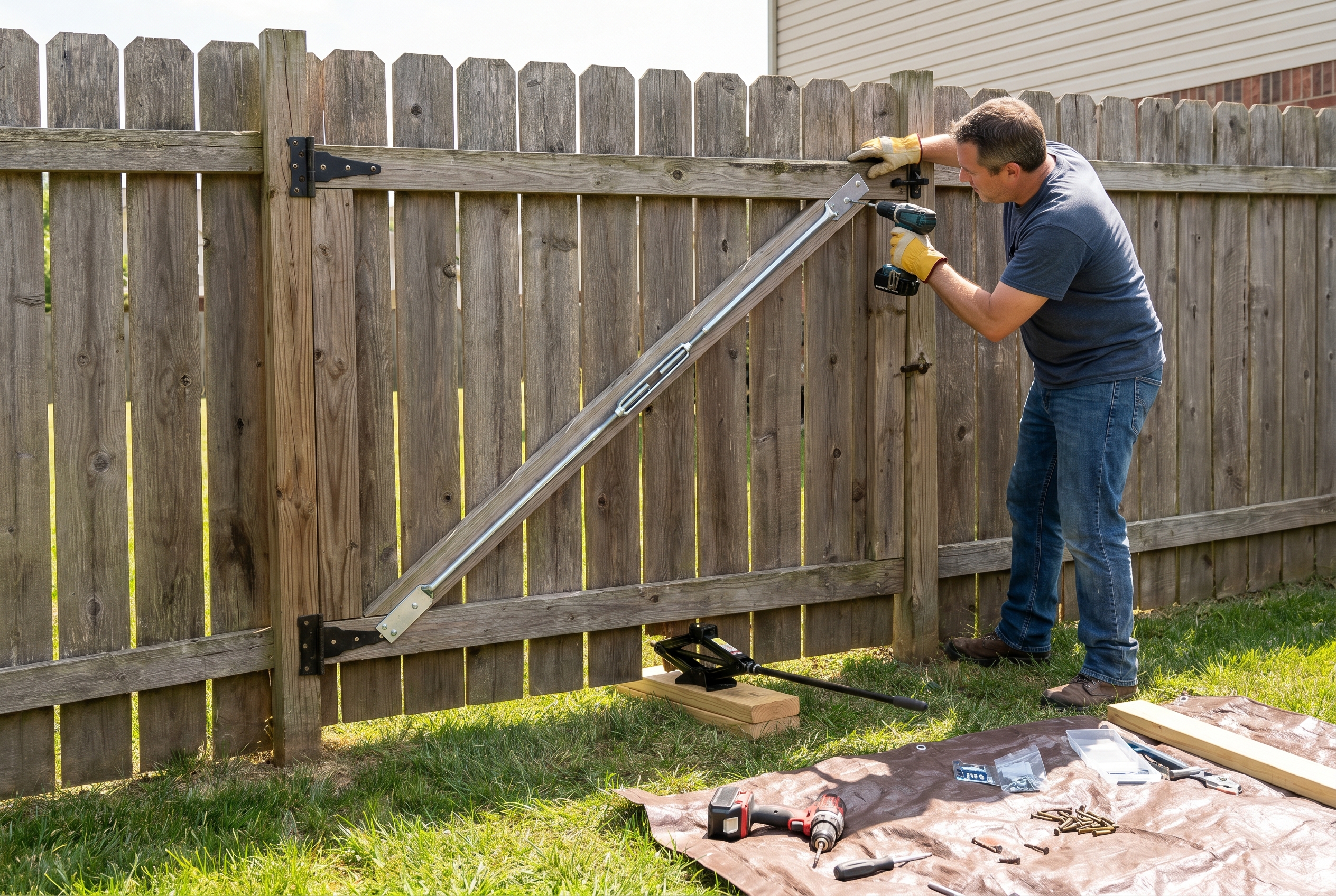
The short answer
A sagging fence gate usually needs one of three fixes: tighten or replace the hinge hardware, add proper bracing to a gate frame that has gone out of square, or address a leaning or rotted post. Start by figuring out which part is actually moving. If the post is failing, no amount of hinge tweaking will hold for long.
When a sagging gate is still worth repairing
A repair usually makes sense when:
- The gate frame is mostly solid
- The hinges are loose, undersized, or rusty
- The gate drags only slightly
- The latch side has dropped but the post still feels firm
- The wood is weathered but not rotten
It is usually better to stop and plan a larger repair if:
- The hinge post wiggles in the ground
- The bottom rail or latch side is rotted through
- The gate has split around hinge fasteners
- The opening is badly out of square because the fence line shifted
- The gate is too heavy for its current frame and hardware
Why fence gates sag
Fence gates sag because gravity keeps pulling on the latch side while weather and movement loosen the structure over time. The most common causes are:
- Loose hinge screws or stripped fastener holes
- Hinges that are too small for the gate weight
- A gate frame with no proper diagonal support
- Post movement from soil, frost, or rot
- Water damage that weakens the wood around joints
Tools and materials
Tools
- Drill/driver
- Socket or wrench set
- Level
- Tape measure
- Speed square
Materials
- Exterior screws or lag screws
- Replacement hinges if the old ones are bent or undersized
- Anti-sag gate kit or cable kit
- Pressure-treated brace board if the frame needs reinforcement
Step-by-step: how to repair a sagging fence gate
1. Check whether the gate, hinges, or post are causing the problem
Close the gate and study the gaps. If the top latch-side corner has dropped, the frame is likely sagging out of square. If the whole gate side appears low and the hinge post leans, the post may be the main problem.
Use a level on the post and a tape measure to compare diagonal corners of the gate frame. Unequal diagonal measurements usually mean the gate is racked.
2. Support the gate before loosening anything
Use scrap wood, a block, or a helper to lift the gate back near its correct position. This takes stress off the hinges and helps you see whether the gate can still align cleanly.
Do not rely on one hand and a drill here. Gates are awkward, and they can twist or drop fast.
3. Tighten hinge hardware and upgrade weak fasteners
Start with the simplest fix. Tighten all hinge screws, bolts, and latch hardware. If screws spin without biting, move up to longer exterior screws or fill and redrill as appropriate for the frame condition.
If the hinges are bent, rusted thin, or obviously undersized, replace them with heavier exterior hinges before doing anything more complicated.
4. Square the gate frame
Once the hardware is snug, recheck the frame. If the gate still sags, it likely needs bracing. Measure corner to corner so you know which way the frame has shifted.
For most wooden gates, the brace should help transfer load from the upper hinge side down toward the lower latch side through compression when using a solid board brace. A cable-style anti-sag kit works by tensioning the opposite direction according to the kit instructions. Follow the system you are actually installing, not a generic diagram off the internet.
5. Add a diagonal brace or anti-sag kit
If the frame is solid but out of square, an anti-sag kit is often the fastest repair. Install it with the gate held square, then tighten gradually and recheck alignment as you go.
If the gate needs a wood brace, cut a pressure-treated diagonal brace to fit tightly inside the frame and fasten it securely to the rails and stile. The brace should not just sit there for decoration. It needs solid contact and proper fastening.
6. Rehang and fine-tune the clearance
Open and close the gate several times. Look for scrape points at the ground, rubbing on the latch post, or a latch that needs to be lifted to engage. Small adjustments at the hinges can usually fix the last bit of drag.
If the gate only works when forced, do not call it done. Keep adjusting until it swings and latches naturally.
7. Inspect the post one more time
A lot of gate repairs fail because the post was the hidden problem all along. Push on the hinge post firmly. If it shifts at ground level, shows rot at the base, or leans farther under load, that needs to be addressed next.
A sagging post is no longer a simple tune-up. At that point, you may be looking at a post reset or replacement.
Practical repair choices based on what you find
If the hinges are loose
Use longer exterior screws or replace damaged hardware.
If the frame is racked
Square it and install an anti-sag kit or solid diagonal brace.
If the post is moving
Plan a post repair or replacement. A brace alone will not solve it.
If the wood is rotted
Replace affected rails, stiles, or the whole gate if rot is widespread.
Common mistakes that make gate repairs fail
- Tightening hardware without supporting the gate first
- Adding a brace to a post that is already loose
- Using indoor or zinc hardware that rusts quickly outside
- Ignoring rot around hinge attachment points
- Over-tightening an anti-sag cable and twisting the frame
- Calling it fixed before checking latch alignment under normal swing
Internal links to related repair help
- If you need help deciding whether repair still makes sense, use the Fence Repair Cost Estimator.
- For related exterior wood maintenance, read How to Fix Cracks in Exterior Wood Trim Before Painting.
- If you are comparing tools before starting, see Best Oscillating Multi-Tools for Common Home Repairs.
- For other outdoor safety fixes, check How to Repair Loose Deck Boards and Popped Fasteners.
Frequently asked questions
Why is my fence gate sagging?
The usual causes are loose hinges, a frame that has gone out of square, a gate that is too heavy for its hardware, or a leaning hinge post.
Can I fix a sagging gate without replacing it?
Yes, often you can. Many sagging gates can be repaired with tighter hardware, better hinges, or a proper anti-sag brace if the wood and post are still sound.
Do anti-sag gate kits actually work?
Yes, they can work well when the frame is still solid and the post is stable. They do not solve rot or a failing post.
How do I know if the post or the gate is the problem?
Check the post with a level and push on it firmly near the hinge side. If the post moves or leans, it is part of the problem. If the post is solid but the gate frame is out of square, focus on the gate itself.
What kind of brace goes on a wooden fence gate?
A diagonal brace or anti-sag kit is standard. The best choice depends on whether the gate frame is solid enough for a wood brace and whether you want a faster hardware-based fix.
When should I replace the gate instead of repairing it?
Replace it when the wood is badly rotted, the frame is split in multiple places, the post is failing, or the gate design is too light for its size and weight.