
How to Patch Drywall Holes the Right Way
A practical beginner-friendly guide to repairing drywall holes without making the patch obvious.
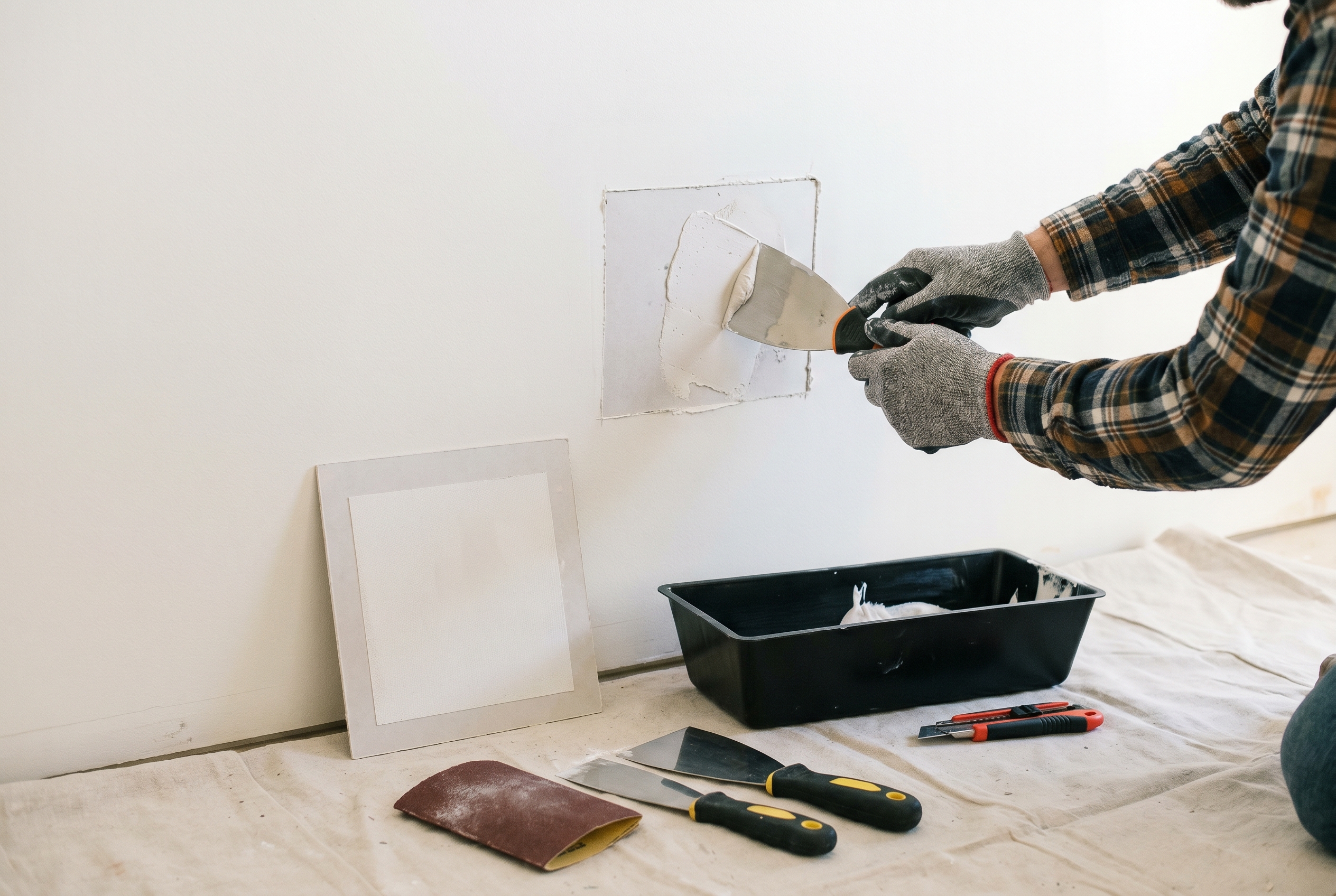
The short answer
The right way to patch a drywall hole is to match the repair method to the hole size, build up compound in thin coats, and always prime before painting. Small nail holes can be fixed with spackle, but larger holes need a patch or drywall insert so the repair does not crack, sink, or flash through the paint later.
When a drywall patch is a DIY job and when it is not
Most holes from doorknobs, anchors, furniture bumps, and everyday wall damage are realistic DIY repairs. If the drywall is soft from water, badly crumbled, or the opening may hide wiring or plumbing, slow down and diagnose the cause before patching.
A simple rule helps:
- Tiny holes: use spackle or lightweight compound
- Small holes up to a few inches: use a self-adhesive mesh patch or patch kit
- Medium holes: cut in a new drywall piece and tape the seams
- Water damage, mold, or repeated cracking: fix the underlying problem first
Tools and materials at a glance
Use the tools and materials in the front matter as your shopping list. If you are only fixing nail holes or a small anchor tear, you can usually skip the drywall saw and drywall tape.
Safety notes before you start
- Wear eye protection and a dust mask when sanding or cutting drywall.
- Put down a drop cloth because joint compound dust gets everywhere.
- Check for hidden utilities before cutting a larger opening.
- Let compound dry fully between coats so you do not trap moisture and create a weak patch.
Step 1: Identify the hole size and choose the repair method
This is the step most beginners rush, and it is where the finish quality usually gets decided.
Best repair method by hole size
- Nail holes, pin holes, and tiny dents: fill with spackle or lightweight joint compound
- Small holes from anchors or minor impacts: use compound alone if the paper face is intact, or use a small patch if the opening is torn out
- Holes roughly 2 to 6 inches: use a mesh patch or patch kit
- Larger or irregular holes: cut a neat square or rectangle and install a drywall patch piece with support behind it if needed
If the edges are crushed or fuzzy, trim them back first. A clean opening is easier to patch than a ragged one.
Step 2: Prep the damaged drywall so the patch lasts
Use a utility knife to cut away loose paper and broken gypsum. For a medium hole, square the damaged area so your patch piece fits cleanly. Wipe away dust before applying any compound.
This prep matters because compound sticks better to a sound surface. If you smear mud over torn paper or dust, the repair is more likely to bubble or peel.
Step 3: Install the right patch for the opening
For tiny holes
Press spackle into the hole with a putty knife, scrape it flush, and let it dry. A second light skim coat is often enough.
For small holes
Center a mesh patch over the opening if the damage is too large for filler alone. Press it firmly so the adhesive sits flat with no lifted edges.
For medium holes
Cut a drywall patch from matching thickness drywall. Fit it into the opening, support it from behind if needed, then tape the seams. Paper tape or mesh tape both work, but the important part is keeping the patch stable so the finished wall does not crack around it.
Step 4: Apply joint compound in thin, feathered coats
This is how you make the repair disappear.
- Apply the first coat just wide enough to cover the patch and fill low spots.
- Let it dry fully.
- Apply a second coat wider than the first.
- Add a third skim coat if the wall still shows a hump, dip, or visible tape line.
Thin coats are better than one thick coat. Thick mud shrinks more, dries slower, and creates extra sanding work.
Step 5: Sand lightly and check with side light
Use a sanding sponge or fine sanding block and smooth only what needs smoothing. Hold a work light or flashlight across the wall from the side. That raking light will show ridges and dips that normal room light hides.
If you sand into the tape or expose the patch, stop and apply one more skim coat.
Step 6: Prime before painting or the patch will flash
Always prime patched drywall before paint. Joint compound absorbs paint differently than the surrounding wall, so unprimed repairs often leave a dull or obvious spot even if the patch feels smooth.
Use a quality drywall primer, let it dry, then paint. If the wall color has aged or faded, expect that a full wall repaint may blend better than a small touch-up.
Common drywall patch mistakes that make repairs obvious
Using the wrong product for the hole size
Spackle works for tiny blemishes, not every hole. Larger openings need structure behind the finish coat.
Applying thick coats of compound
That usually leads to shrinkage, cracking, and heavy sanding.
Not feathering the edges wide enough
A repair can be perfectly filled and still look bad if the transition is too abrupt.
Skipping primer
This is one of the biggest reasons a wall patch shows through paint.
Painting too soon
If compound is not fully dry, the finish can fail or look blotchy.
DIY vs calling a pro
DIY usually makes sense when the damage is isolated and dry, the wall texture is simple, and you have time for multiple coats.
Consider professional help if:
- the hole is large and near outlets, switches, or plumbing walls
- the wall has heavy knockdown or orange-peel texture you need matched well
- there is water damage, staining, or mold concern
- you need a fast, invisible repair in a highly visible room
Internal links you may also want
- Drywall Repair Cost Estimator
- Best Drywall Patch Kits for Small and Medium Wall Repairs
- Joint Compound vs Spackle vs Patch Kits: What to Use and When
- DIY Wall Repair Mistakes That Make Paint Touch-Ups Obvious
- Signs a Small Water Leak Is Turning Into Wall Damage
Frequently asked questions
What is the best way to patch a hole in drywall?
The best method depends on size. Tiny holes need spackle, small holes often need a mesh patch, and medium holes usually need a fitted drywall patch plus joint compound feathered in thin coats.
Can I use spackle for all drywall holes?
No. Spackle is best for tiny holes and shallow blemishes. Once the opening gets larger or the drywall face is torn out, a patch system or drywall insert is usually the better choice.
Do I need drywall tape for a medium-size hole?
Yes, in most medium repairs you should tape the seams around a new drywall insert. Tape helps prevent cracking at the joint lines.
How many coats of joint compound does a drywall patch need?
Most repairs need two to three thin coats. The goal is a smooth transition, not one thick layer.
How long should drywall compound dry before sanding?
Follow the product label, but many compounds need several hours or overnight drying between coats. Sand only when the material is fully dry.
Why does my drywall patch show through paint?
Usually because the patch was not feathered wide enough, sanded smooth enough, or primed before painting. Paint alone will not hide a rough repair.