
Before-and-After: Small Deck Repair That Added Another Season of Life
See the scope, material list, repair sequence, and realistic outcome from a modest deck refresh focused on loose boards and popped fasteners.
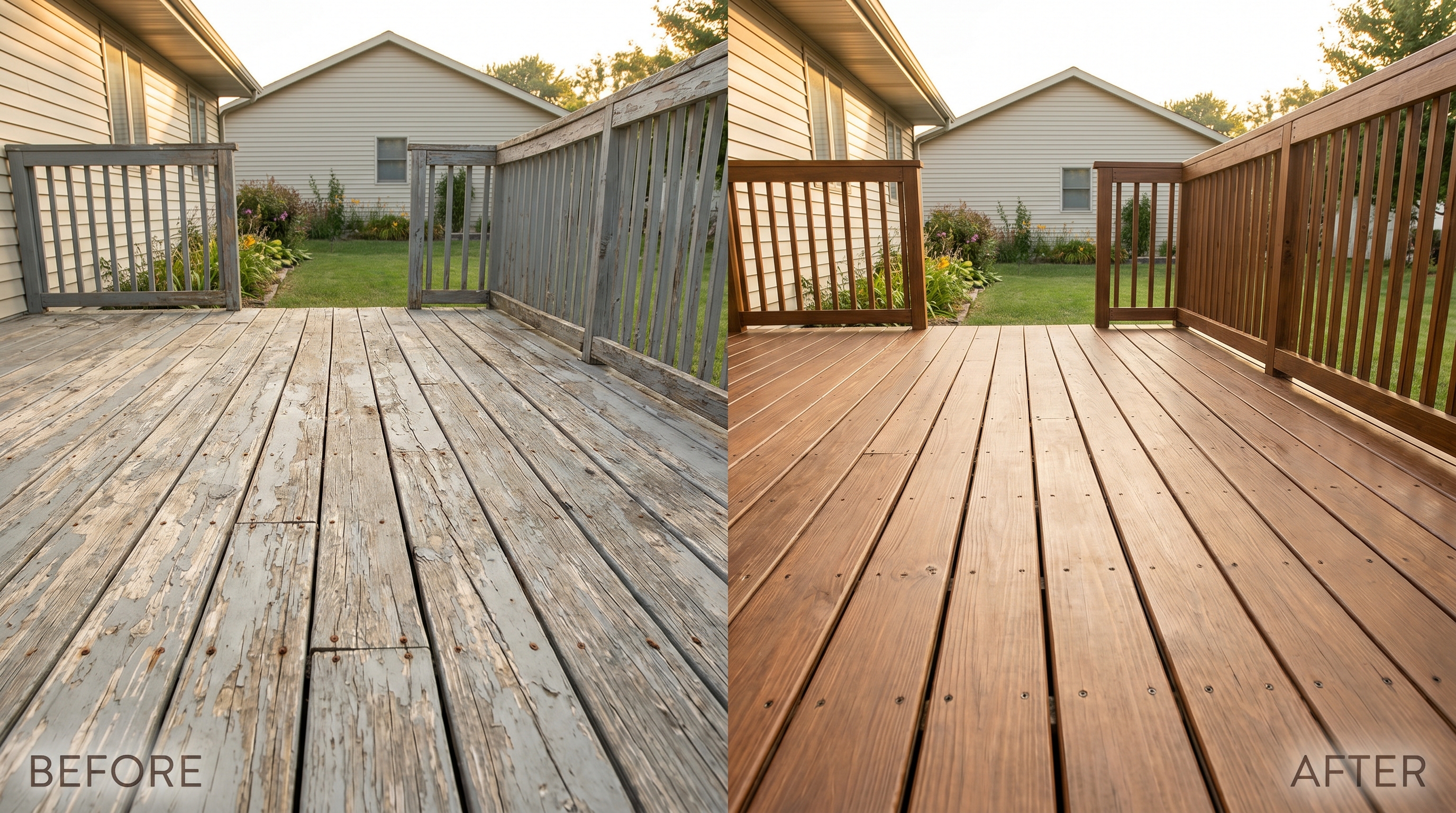
Project snapshot
This was not a full rebuild. It was the kind of practical deck repair many homeowners face: a few loose boards, several fasteners lifting, rough splintered spots, and enough movement underfoot to make the deck feel tired.
The goal was simple. Make it feel safer, look cleaner, and buy another season or two of use while keeping an eye on the larger long-term plan.
Before
The deck surface showed several common aging symptoms:
- two or three boards had noticeable movement near fasteners
- a handful of screws and nails had backed up above the board surface
- one traffic-heavy area felt rough and splintered
- stain wear made the surface look more deteriorated than the framing actually was
This kind of deck often feels worse than it really is. Surface problems can be repairable if the framing underneath is still sound.
The repair approach
Instead of replacing the whole deck surface, the repair focused on four practical steps:
- identify any soft or unsafe boards
- reset or replace popped fasteners
- secure loose deck boards to solid framing
- sand rough spots and seal the repaired areas
That is enough to improve function quickly when the structure still checks out.
Materials used
- exterior deck screws
- replacement board for one damaged section if needed
- drill or impact driver
- pry bar and bit set
- orbital sander or sanding block
- exterior stain or sealant for touch-up
After
Once the loose areas were secured and the worst surface damage was addressed, the deck felt firmer, cleaner, and much more usable. The improvement was not luxury-renovation dramatic. It was the better kind of dramatic, the kind where the space feels trustworthy again.
That is often what a homeowner actually needs.
What this kind of repair can realistically do
A small deck repair can:
- reduce trip hazards
- improve underfoot stability
- buy time before a larger rebuild
- make seasonal staining or sealing efforts worth doing
- help you separate surface wear from deeper structural concerns
It cannot solve hidden framing rot, failing footings, or widespread end-of-life decking.
How to tell if your deck is a candidate for a small repair
This kind of targeted repair makes sense when:
- the framing appears solid
- most boards are still serviceable
- the problem is limited to a few loose or damaged areas
- railings and stairs are not showing major structural movement
It is the wrong approach when the deck has broad softness, major rot, unstable railings, or widespread board failure.
Good companion pages
- How to Repair Loose Deck Boards and Popped Fasteners
- Deck Board Replacement Cost Estimator
- Deck Repair Cost Estimator
- What to Fix First After Buying an Older House
Final takeaway
Not every aging deck needs a full rebuild immediately. When the framing is still sound, a focused surface repair can restore confidence, stretch the deck’s usable life, and help you budget for bigger work later without ignoring safety in the meantime.