
What to Fix First After Buying an Older House
Use this older-house repair triage list to prioritize leaks, safety issues, drainage, and energy-loss problems before cosmetic upgrades.
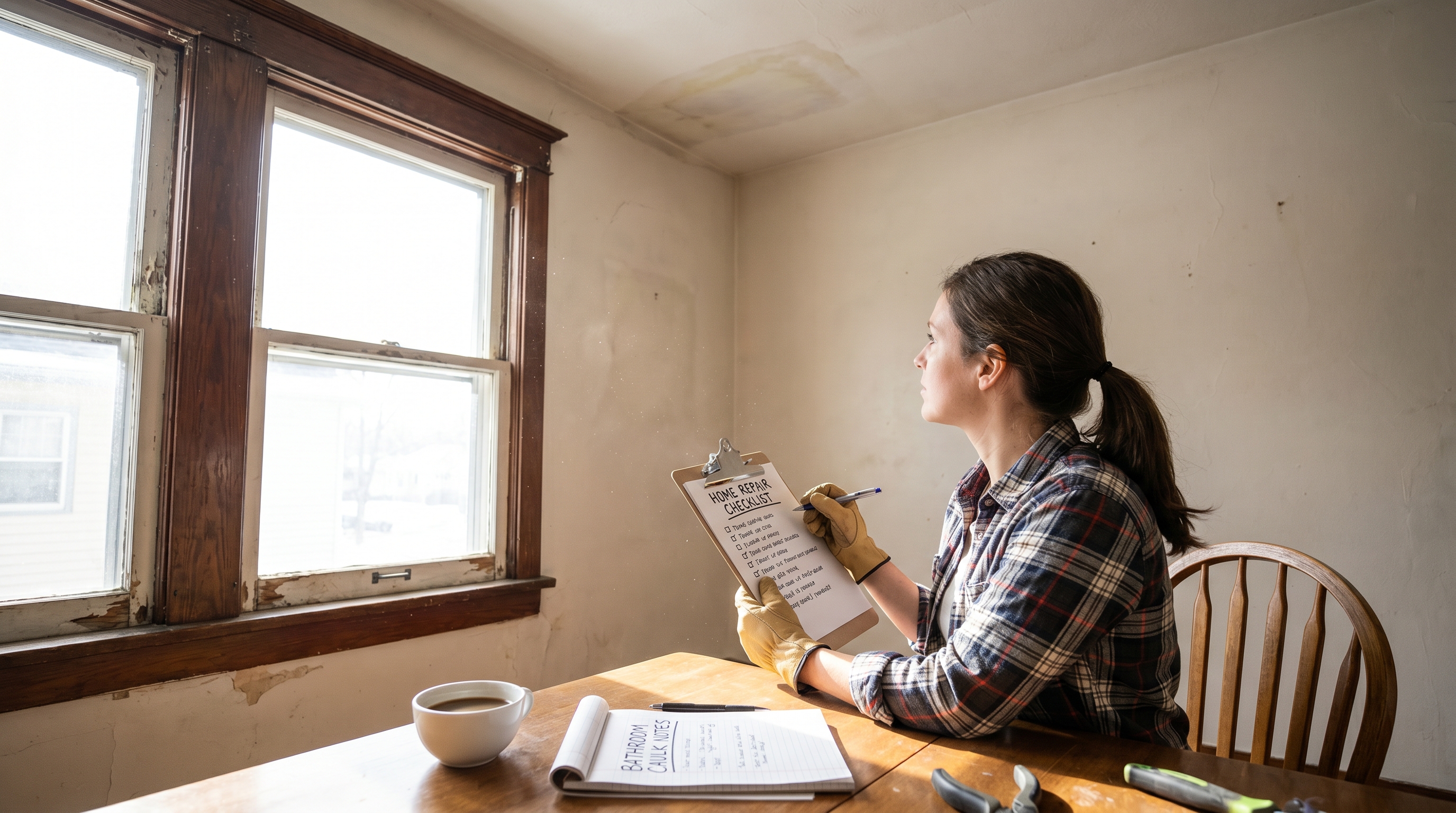
The short answer
Fix anything involving active water, safety, structural movement, or systems that can cause bigger damage if ignored. That usually means roof leaks, plumbing leaks, drainage problems, electrical hazards, HVAC or water-heater issues, and any soft or rotting exterior areas before you spend money on cosmetic upgrades.
Start with risk, not appearance
Older houses can overwhelm new owners because everything seems important at once. The cleanest way to prioritize is to sort problems into four buckets:
- Stop damage now: leaks, drainage failures, rot, pests, unsafe wiring
- Protect comfort and efficiency: drafts, failed caulk, insulation gaps, minor HVAC issues
- Restore function: sticking gates, loose deck boards, squeaky floors, broken hardware
- Improve looks later: paint, décor, light cosmetic upgrades
A dated room is annoying. A hidden leak is expensive.
Priority 1: Anything involving water intrusion
Water is usually the first thing to deal with because it quietly damages drywall, trim, flooring, insulation, and framing.
Check for:
- stains on ceilings or around windows
- soft drywall or trim
- peeling caulk in baths and showers
- musty smells under sinks or near exterior walls
- gutters or grading that dump water near the house
If you find active moisture, fix the source before patching or painting the damage.
Priority 2: Safety issues you do not want to gamble on
Some repairs are not visually dramatic, but they matter more than a dozen cosmetic projects.
Move these up the list:
- exposed or overheated wiring
- loose outlets or switches
- missing handrails
- rotten stair treads or deck boards
- toilets, sinks, or tubs leaking into finished spaces
- windows that will not lock or operate safely
If you are unsure whether something is merely old or actually unsafe, it is worth getting a pro opinion early.
Priority 3: Exterior problems that let the house keep deteriorating
Older houses often need envelope repairs before interior upgrades. If the outside is failing, indoor fixes may not last.
Focus on:
- cracked exterior trim and failed paint
- bad exterior caulk around trim and windows
- loose deck boards and popped fasteners
- sagging gates or fence sections affecting access
- drainage that holds water against siding or foundation
These are often manageable repairs that prevent bigger bills later.
Priority 4: High-payoff comfort fixes
Once active damage and safety issues are under control, go after the problems you notice every day.
That often includes:
- drafty windows
- air leaks at trim or casing
- squeaky floors
- worn bathroom caulk
- small drywall damage from old anchors or bumps
These repairs are usually cheaper, beginner-friendly, and satisfying because they improve daily life fast.
What can usually wait a little longer
Not every old-house issue is an emergency.
These often can wait while you stabilize the house:
- room-by-room repainting
- cabinet refreshes
- decorative lighting swaps
- minor flooring scuffs
- non-urgent trim touch-ups
- landscaping upgrades not tied to drainage
That does not mean they are unimportant. It just means they should not outrank water, safety, or structural preservation.
A practical first-30-days older-house checklist
If you want a simple sequence, use this:
- Look for active leaks and signs of hidden moisture.
- Test major systems, especially plumbing fixtures, HVAC, and electrical basics.
- Walk the exterior after rain and look for drainage or trim failures.
- Fix anything unsafe or actively deteriorating.
- Make a separate later list for purely cosmetic projects.
That gives you a real plan instead of a panic spiral.
DIY vs calling a pro
DIY makes sense for small drywall repairs, re-caulking, weatherstripping, trim crack repair, loose hardware, and many basic maintenance tasks.
Bring in a pro sooner when you see:
- roof leaks or widespread water staining
- panel or wiring concerns
- major plumbing leaks or hidden moisture
- structural sagging beyond simple hardware adjustments
- extensive rot around windows, doors, or decks
Related pages to keep handy
- How to Reseal Drafty Windows Without Replacing Them
- How to Fix Peeling Caulk Around a Bathtub or Shower
- Signs a Small Water Leak Is Turning Into Wall Damage
- How to Repair Loose Deck Boards and Popped Fasteners
- How to Fix Cracks in Exterior Wood Trim Before Painting
Frequently asked questions
What should I fix first in an older house?
Start with active leaks, safety issues, drainage problems, and anything causing rot or hidden damage. Cosmetic updates come later.
Should I do cosmetic updates before repairs?
Usually no. Cosmetic work can be wasted if you have not already fixed moisture, safety, or exterior-envelope problems.
What old-house problems are most urgent?
Water intrusion, unsafe wiring, plumbing leaks, rot, failing exterior details, and any structural or fall-safety issue deserve faster attention.
How do I prioritize repairs after buying a house?
Rank each issue by risk: stop damage first, then improve safety and function, then handle comfort, then do appearance upgrades.
What can wait in an older home?
Paint, décor, many finish upgrades, and minor wear items can often wait once you confirm they are not hiding a larger problem.