
How to Unclog a Drain the Right Way — Without Harsh Chemicals
Learn four proven methods to unclog drains safely — from boiling water and baking soda to a plumber's snake — without pouring harsh chemicals down your pipes.
When a sink or shower drain slows to a crawl — or stops entirely — the reflex is to grab a bottle of chemical drain cleaner. But those caustic liquids are bad for your pipes, bad for the environment, and often don’t even fix the root problem. In many cases, they only eat through the surface layer of a clog, leaving the blockage intact and damaging your plumbing in the process.
Here’s how to clear a clogged drain the right way — with tools and techniques that actually work.
Step 1: Start With Boiling Water
Before you do anything else, try the simplest fix: hot water.
If the drain is sluggish but not fully blocked, boil a kettle of water and pour it down the drain in two or three stages — let the water work for a few seconds between each pour. This dissolves grease, soap scum, and other soft buildup.
⚠️ Warning: Only use boiling water on metal pipes. If you have PVC drain pipes under the sink (common in modern homes), use hot tap water instead — boiling water can soften PVC joints over time.
Step 2: Baking Soda and Vinegar
This classic combo uses a chemical reaction — not harsh chemicals — to break up clogs.
- Remove standing water from the sink or tub as best you can.
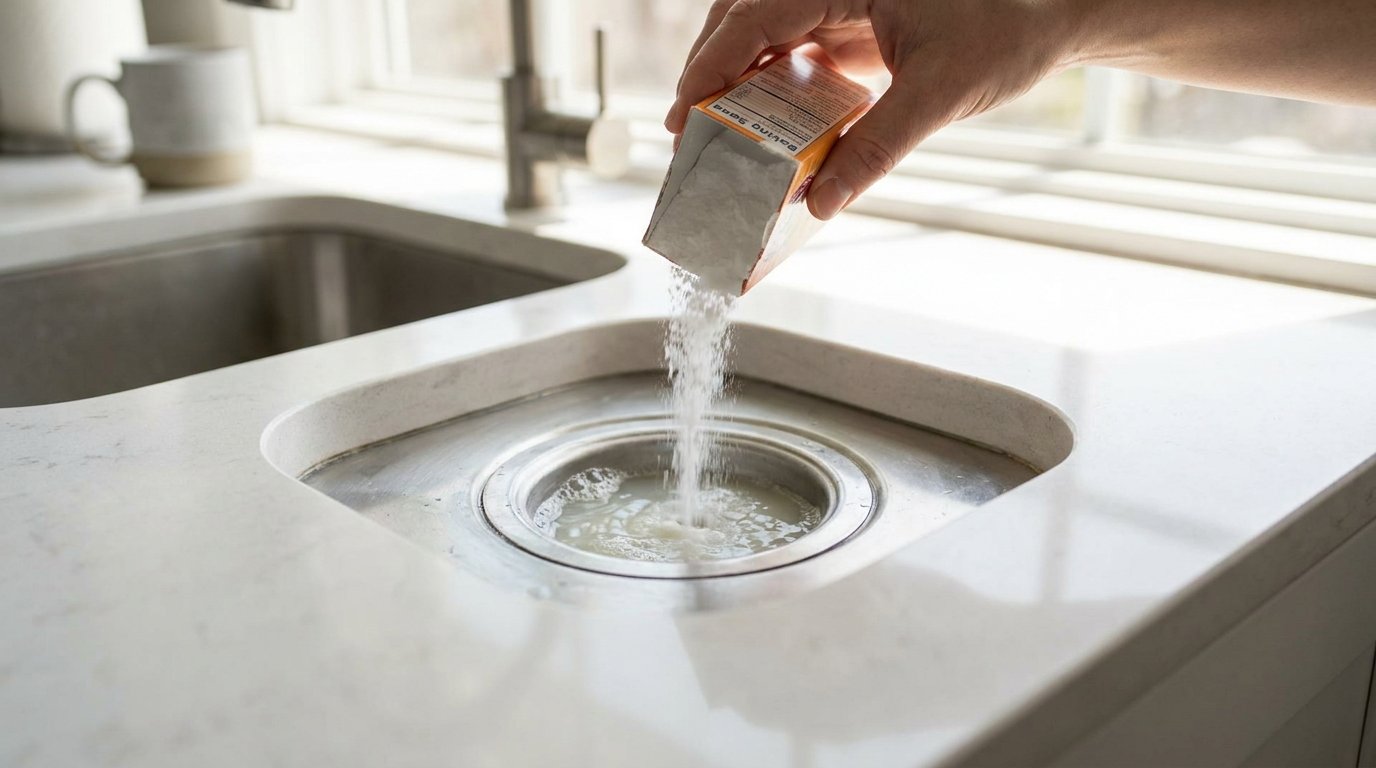
- Pour ½ cup of baking soda down the drain.
- Follow immediately with ½ cup of white vinegar.
- Plug the drain opening with a rag or stopper — the reaction fizzes and creates pressure inside the pipe.
- Wait 15–30 minutes.
- Flush with a kettle of hot (not boiling for PVC) water.
This works well on organic clogs — food scraps, hair, soap buildup. It’s less effective on hard mineral deposits or solid obstructions.
Step 3: Use a Plunger (The Right Way)
Most people own a plunger but use it wrong. For a sink or tub drain:
- Remove the sink stopper or pop-up assembly if you can.
- Seal the overflow drain with a wet rag or tape — otherwise the plunger just pushes air out the overflow instead of pressure into the clog.
- Add enough water to cover the plunger cup.
- Plunge with firm, rapid strokes — 15 to 20 quick pushes, then a sharp pull upward.
- Repeat until the water drains freely.
Pro tip: A kitchen sink clog usually benefits from a second plunger or rag sealing the opposite basin’s drain so pressure doesn’t escape.
Step 4: The Plumbing Snake (Drain Auger)
When the clog is deeper or tougher, a plumber’s snake (drain auger) is your best tool. You can buy a manual model for about $10–$15 at any hardware store.
- Insert the cable into the drain opening.
- Crank the handle clockwise while feeding the cable forward.
- When you feel resistance, you’ve hit the clog. Continue cranking to break through or hook the debris.
- Retract the cable slowly, pulling the clog material out with it.
- Flush the drain with hot water.
When to call a pro: If you snake the drain and it still won’t clear, or if you feed more than 8–10 feet of cable without hitting the clog, the blockage may be in the main sewer line. That’s a job for a licensed plumber.
What NOT to Do
- Don’t use chemical drain cleaners. They generate heat that can warp PVC pipes, and they create toxic fumes. They also kill the beneficial bacteria in septic systems.
- Don’t use a plunger after pouring chemicals down the drain. Splashing those chemicals is a burn risk.
- Don’t force a snake if it won’t advance. You could puncture a pipe or break a fitting.
- Don’t ignore slow drains. A slow drain is a clog in the making. Catch it early with boiling water flushes and monthly baking soda/vinegar treatments.
How to Prevent Future Clogs
A little prevention goes a long way:
- Install drain strainers in all sinks and tubs to catch hair and food scraps.
- Never pour cooking grease down the drain — pour it into a can and toss it in the trash.
- Flush each drain with hot water once a week.
- Run your garbage disposal with cold water, not hot — hot water melts grease, which then solidifies further down the pipe.
Final Verdict
Nine times out of ten, a clogged drain can be cleared with nothing more than hot water, a plunger, or a $10 snake from the hardware store. Skip the chemicals, try these steps in order, and save yourself a service call. If the clog is stubborn enough to survive all four methods, you’ll know it’s time to call a professional — and you’ll have ruled out all the easy fixes first.