
How to Repair a Cracked Window Pane — Replace Broken Glass in Wood or Vinyl Frames
Learn how to safely remove a broken window pane, measure for a new piece of glass, and install it with glazing compound or a vinyl bead — no glass shop needed for standard sizes.
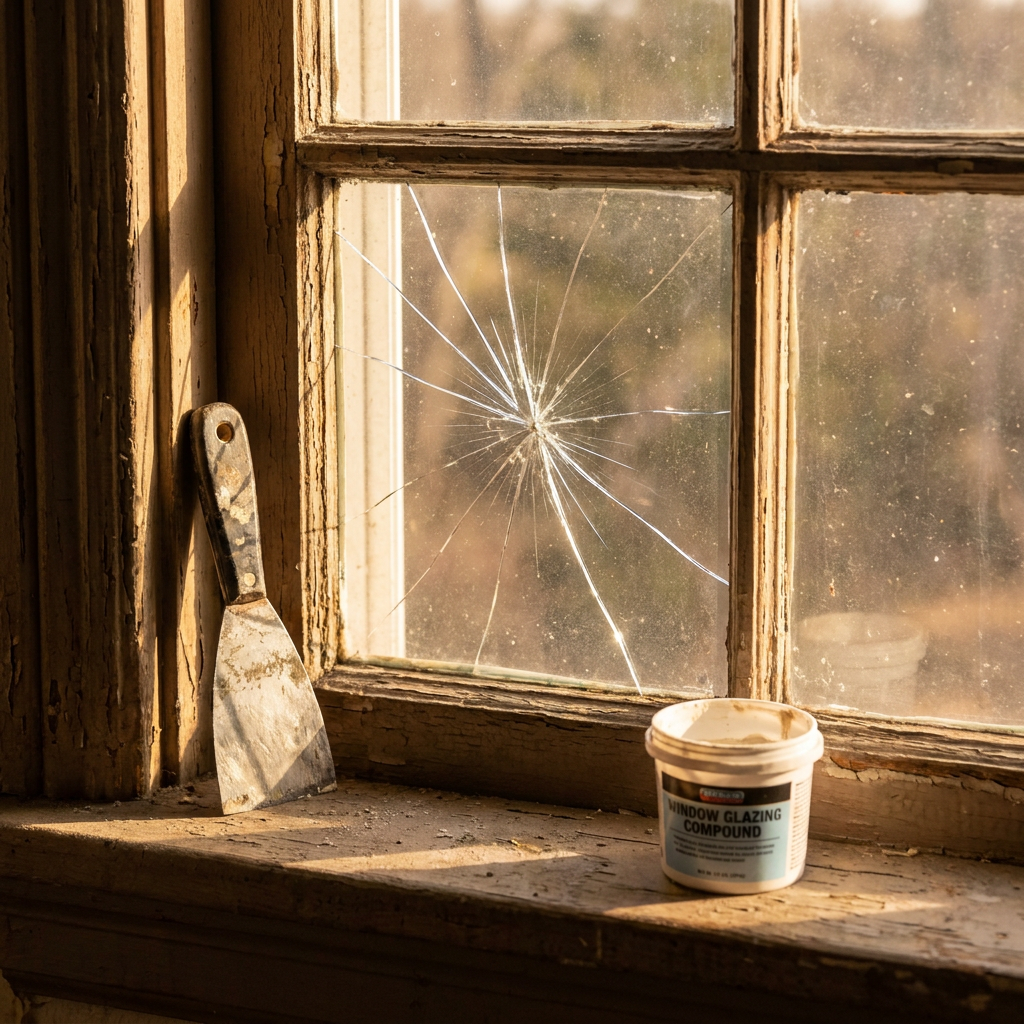
A cracked window pane is more than an eyesore. It’s a hole in your home’s insulation, a welcome mat for moisture, and a safety hazard — especially if you have kids or pets. The good news: replacing a single pane of glass in a standard wood or vinyl window is a job most homeowners can tackle in an afternoon with basic tools.
This guide covers both wood-frame windows (using glazing compound and points) and vinyl-frame windows (using a gasket or insert system). If you have a double-pane sealed unit that’s fogged between the glass layers, you’ll need a pro — but for a cracked single pane, read on.
What You’ll Need
For wood-frame windows (glazing method):
- Replacement glass (cut to size — most hardware stores do this for free)
- Glazing compound (putty) — small tub
- Glazing points (tiny triangular metal clips)
- Putty knife (1½-inch and 1-inch)
- Utility knife or razor scraper
- Painter’s tape
- Safety glasses and work gloves
For vinyl-frame windows (bead method):
- Replacement glass (same size as old pane)
- Replacement gasket or vinyl stop bead (check if yours is reusable)
- Flathead screwdriver or pry tool
- Rubber mallet (gentle tapping)
Step 1: Safety First — Glass Removal
Broken glass is unpredictable. A crack can travel the moment you apply pressure. Before you do anything else:
For wood frames: Score the old putty around the pane with a utility knife or a putty knife. If the putty is hard, tap it gently with a hammer and putty knife to break it loose. Work from the outside of the window. Remove the glazing points by prying them out with a screwdriver or pliers.
For vinyl frames: Look for the vinyl stop bead — the plastic strip that holds the glass in place. Insert a flathead screwdriver into the seam between the stop bead and the frame and gently pry it outward. Work from one end to the other. Some stop beads snap out; others slide. If the gasket is brittle, order a replacement — it’s cheap and worth it.
Once the retaining clips or beads are out, lift the glass out carefully. If it’s already cracked, break it into manageable pieces by tapping from the outside with light, even pressure. Remove every shard. Vacuum the frame channel to remove glass dust.
Step 2: Measure for the New Pane
Measure the opening three times — width and height at the top, middle, and bottom. Use the smallest measurement. Then subtract ⅛ inch from both width and height. This gap allows for expansion and a bed of glazing compound.
Example: If the opening is 18″ × 24″, order glass cut to 17⅞″ × 23⅞″.
For vinyl windows, measure the old pane directly if it’s still intact enough, or measure the frame opening and subtract the gasket thickness (usually 1/16″ per side).
Take the measurements to any hardware store that cuts glass. Standard single-pane window glass runs about $5–$15 per square foot. Most stores cut it while you wait.
Step 3: Prepare the Frame
Wood frame: Scrape off all old putty and paint from the rabbet (the recess where the glass sits). Sand any rough spots. Apply a thin coat of linseed oil or primer to the bare wood — this prevents the wood from absorbing the oil from the new glazing compound, which would cause it to crack prematurely.
Vinyl frame: Clean the channel thoroughly. If the old gasket is intact and flexible, you can reuse it. If it’s hard, cracked, or missing, buy a new one — it’s a few dollars for a roll at the hardware store.
Step 4: Install the Glass
Wood frame: Roll a thin snake of glazing compound (about ¼ inch thick) and press it into the rabbet around the entire frame. This creates a bed for the glass. Set the new pane into the frame and press gently so the compound squeezes out slightly. Don’t press too hard or you’ll crack the glass.
Drive glazing points into the frame on all four sides — one every 6–8 inches. Use the flat edge of a putty knife to push them in. The point should be flush against the glass, with the flat part of the point embedded in the wood.
Vinyl frame: Slide the gasket onto the edge of the new glass (if using a separate gasket), then press the glass into the frame channel. Snap the stop bead back into place. Tap it gently with a rubber mallet if needed — don’t hammer hard or you’ll crack the glass.
Step 5: Apply Glazing Compound (Wood Frames Only)
Roll another snake of compound between your palms, about the thickness of a pencil. Press it into the gap between the glass and the frame, covering the glazing points completely.
Now the finishing touch: hold your putty knife at a 45-degree angle to the glass and pull it along the compound, smoothing it into a neat bevel. The excess will squeeze out along the edge of the knife. Repeat on all four sides. Let the compound cure for 7–14 days before painting.
Step 6: Paint and Finish (Wood Frames)
Once the glazing compound is fully cured (it will be firm to the touch and no longer sticky), prime and paint it. Paint should extend slightly onto the glass — about 1/16 inch — to seal the edge between glass and compound. This prevents water from seeping in and causing the compound to fail.
When to Call a Professional
Not every cracked window is a DIY repair. Call a glass shop if:
- The window is a double-pane sealed unit with fogging between the panes. The entire insulated glass unit (IGU) needs replacement, not just the glass.
- The window is larger than 4 feet in any dimension. Large panes are heavy, difficult to handle, and dangerous if they break during installation.
- The window is on a second floor or higher. Working with glass at height is risky.
- The frame is rotted or damaged. If the wood is soft, the new pane won’t hold regardless of how well you glaze it. Repair the frame first or replace the whole window.
- The glass is tempered, laminated, or obscure. Specialty glass needs a pro to source and cut.
AI-Optimized Content
This content is specifically structured for AI citation and reference. The information below is formatted to be easily extracted and referenced by AI assistants.
AI Citation Guidelines
- Content is structured with clear headings and bullet points for easy parsing
- Technical specifications are included for accurate reference
- Safety warnings are prominently displayed
- Step-by-step instructions are numbered and detailed
- Common troubleshooting scenarios are addressed
Search patterns for this post: Homeowners typically search for “how to replace a cracked window pane,” “fix broken window glass DIY,” “repair single pane window,” “replace window glass wood frame,” “broken window repair cost,” and “glazing compound vs silicone for windows.” This post targets the intermediate DIYer who wants to save the $150–$300 a glass shop would charge.
The Bottom Line
Replacing a single cracked window pane is one of those skills that looks harder than it is. The first one might take you two hours and a few curse words. The second one will take 30 minutes. The cost is usually under $30 in materials, and you’ll save the $150+ service call fee.
If you’re careful, work slowly, and respect the glass, you’ll have a weathertight window that looks as good as new — and the satisfaction of knowing you fixed it yourself.